

Cultural & Folk Festival · Asia-Pacific
The Mainichi Shodo Exhibition of Japan: nine calligraphy classes from kanji and kana through to seal engraving, in general and U23 brackets.
Sets up a submission-judged shodo exhibition: nine brush classes from kanji and kana to seal engraving, a general and an under-23 bracket, and formal award tiers instead of live rounds.
This template builds a Japanese calligraphy exhibition in the style of the large national shodo shows held each year in Japan. A coordinator opens an event that already holds the nine entry classes, the two age brackets and the award tiers, instead of starting from a blank catalogue. It suits any organiser who collects brush-written work in advance and has it judged by a panel, rather than running a timed live round.
The nine classes follow the way shodo exhibitions divide the field, by type of work and not by script style. Kanji is split by length into Division I (fifteen or more characters) and Division II (two to fourteen). Kana is run as Division I and Division II. Kindai Shibunsho covers modern poetry and prose, Daijisho is large-character work, Tenkoku is seal engraving, Kokuji is carved characters and Zen-ei Sho is avant-garde calligraphy. Every class is an individual entry in Japanese, open to both genders.
Two brackets are installed: Ippan (general entry, 24 and over) and U23 (16 to 23). The source regulations fix age as at 1 April, so check the date your own rules use. Each judge gives a mark out of 100 per entry as a working default, because no numeric scoring scale is published, and entry fees are set to 0 so each organiser sets their own. Awards are modelled as tiers rather than placings: a top prize and an excellence and honourable-mention tier for the general bracket, an equivalent three tiers for U23, and a ministerial-level prize above them.
To run it, open the Registration Page for entries and deadlines, add your judges, and let the tabulation produce a ranked result per class and bracket. The work is judged unmounted and normally arrives by post or drop-off, so there is no stage time to schedule and no live round. Treat the tier points as a starting point and adjust them if your rules award tiers by panel decision rather than by rank.
Where this event is run
Japan, where shodo is a mainstream art and large annual exhibitions draw tens of thousands of entries, and any calligraphy society, cultural centre, school or university running a brush-writing exhibition with fixed classes and age brackets. It is a poor fit for a live, timed writing contest or for children’s handwriting competitions, because it has no live round and its brackets start at 16.
- Japan
- Japanese cultural centres and calligraphy societies abroad
Key facts
- 9 individual classes, all off stage: Kanji I and II, Kana I and II, Kindai Shibunsho, Daijisho, Tenkoku, Kokuji and Zen-ei Sho
- Two brackets: Ippan (24 and over) and U23 (16 to 23), age fixed as at 1 April in the source regulations
- Submission-judged on unmounted work; there is no live round and no time limit
- Each judge marks out of 100 per entry (a working default; no scale is published); entry fees are set to 0
- Seven award tiers: three general, three U23 and a ministerial-level prize above them
- All entries are in Japanese and open to both genders
- Age groups
- 2
- Competition items
- 9
- Competitions
- 18
- Grade bands
- 0
- Rank awards
- 7
Age groups
Every candidate is placed into one of these groups by age, and competitions are run per group.
Ippan (General)

Candidates aged 24 to 99 compete in this group
U23 (16-23)

Candidates aged 16 to 23 compete in this group
Competition items
The events themselves — each with the category it belongs to and how judges score it.
Kanji Division I (15 or more characters)

Kanji Division II (2 to 14 characters)

Kana Division I

Kana Division II

Kindai Shibunsho (Modern Poetry Calligraphy)

Daijisho (Large Character Calligraphy)
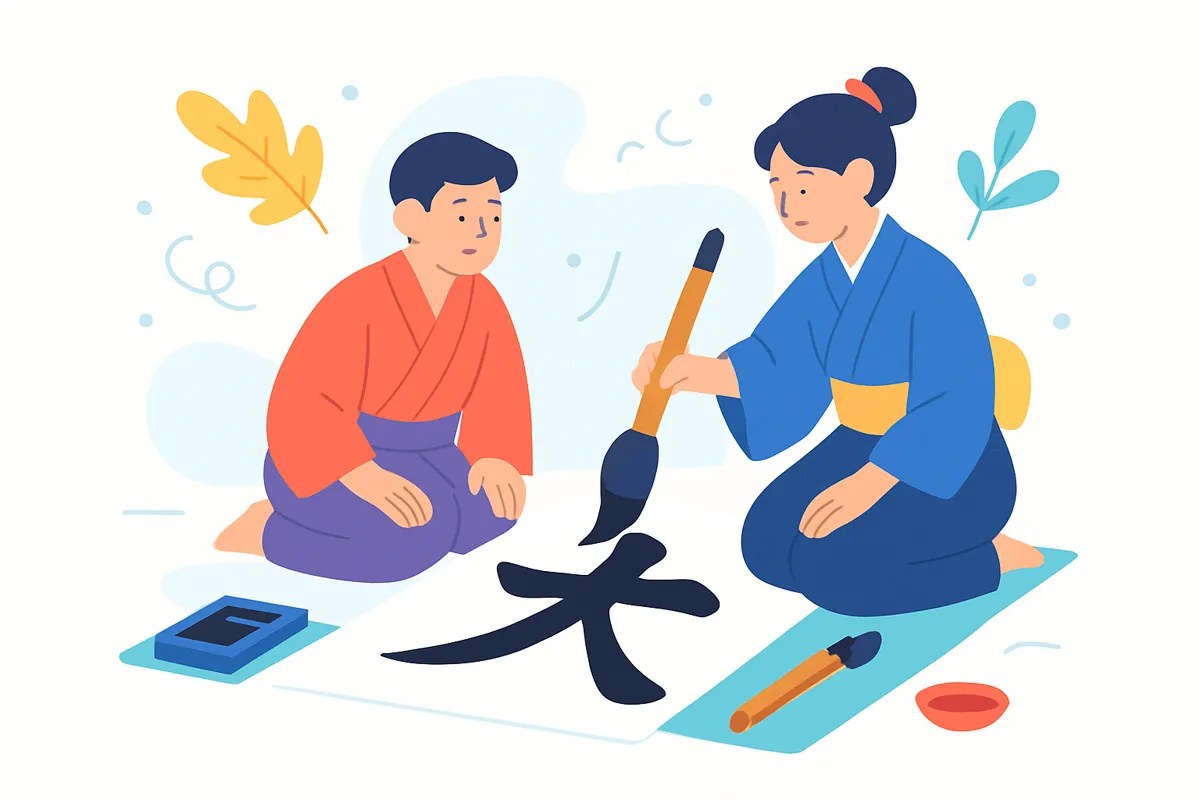
Tenkoku (Seal Engraving)

Kokuji (Carved Characters)
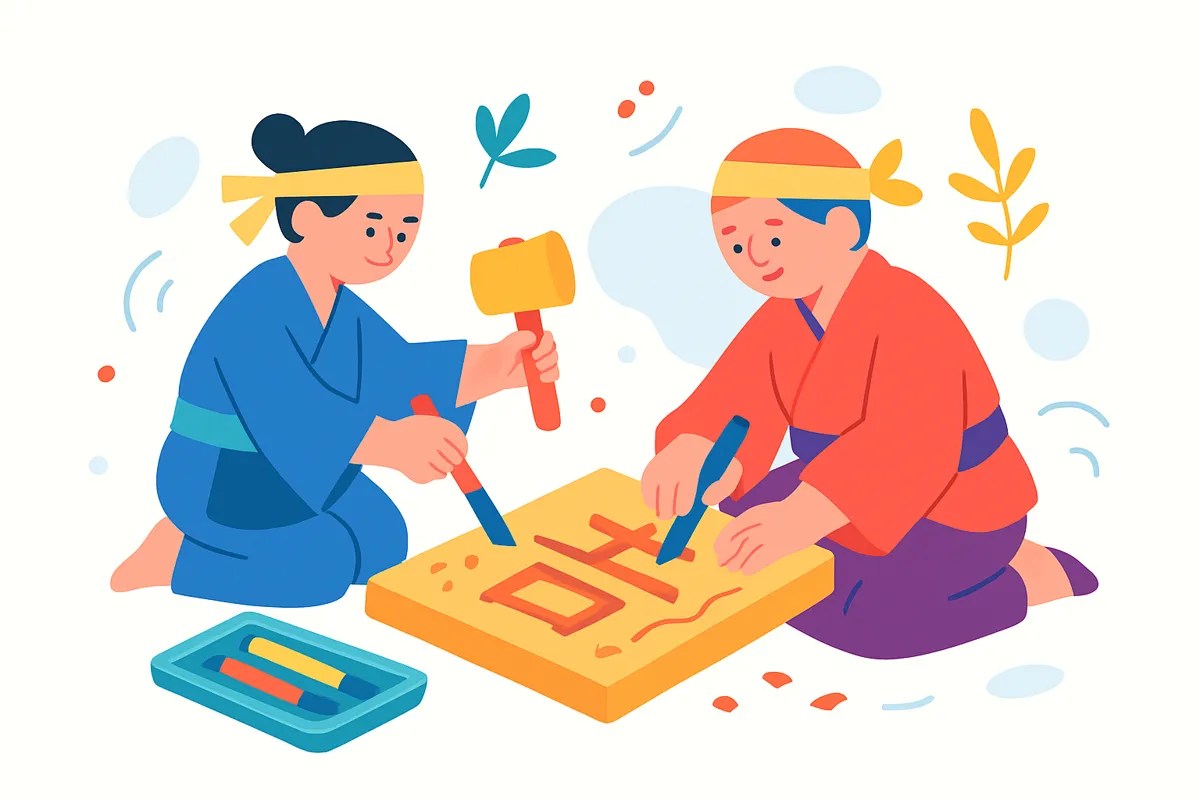
Zen-ei Sho (Avant-garde Calligraphy)

Competitions by group
The full schedule matrix, sectioned by age group then category — which item runs for whom, and for how long.
| Item | Type | Gender | Language | Max score | Time limit |
|---|---|---|---|---|---|
| Ippan (General) | |||||
| Off Stage | |||||
| Item | Type | Gender | Language | Max score | Time limit |
| Kanji Division I (15 or more characters) | Individual | — | Japanese | 100 | — |
| Kanji Division II (2 to 14 characters) | Individual | — | Japanese | 100 | — |
| Kana Division I | Individual | — | Japanese | 100 | — |
| Kana Division II | Individual | — | Japanese | 100 | — |
| Kindai Shibunsho (Modern Poetry Calligraphy) | Individual | — | Japanese | 100 | — |
| Daijisho (Large Character Calligraphy) | Individual | — | Japanese | 100 | — |
| Tenkoku (Seal Engraving) | Individual | — | Japanese | 100 | — |
| Kokuji (Carved Characters) | Individual | — | Japanese | 100 | — |
| Zen-ei Sho (Avant-garde Calligraphy) | Individual | — | Japanese | 100 | — |
| U23 (16-23) | |||||
| Off Stage | |||||
| Item | Type | Gender | Language | Max score | Time limit |
| Kanji Division I (15 or more characters) | Individual | — | Japanese | 100 | — |
| Kanji Division II (2 to 14 characters) | Individual | — | Japanese | 100 | — |
| Kana Division I | Individual | — | Japanese | 100 | — |
| Kana Division II | Individual | — | Japanese | 100 | — |
| Kindai Shibunsho (Modern Poetry Calligraphy) | Individual | — | Japanese | 100 | — |
| Daijisho (Large Character Calligraphy) | Individual | — | Japanese | 100 | — |
| Tenkoku (Seal Engraving) | Individual | — | Japanese | 100 | — |
| Kokuji (Carved Characters) | Individual | — | Japanese | 100 | — |
| Zen-ei Sho (Avant-garde Calligraphy) | Individual | — | Japanese | 100 | — |
Grades and ranks
How scores turn into grade bands, and how many points each placing is worth.
| Rank | For | Points |
|---|---|---|
| Monbukagakudaijin Sho (MEXT Minister Prize) | 12 | |
| Mainichi Sho | 10 | |
| Shusaku Sho (Excellence) | 6 | |
| Kasaku Sho (Honourable Mention) | 3 | |
| U23 Mainichi Sho | 10 | |
| U23 Shinei Sho (Rising Talent) | 6 | |
| U23 Shorei Sho (Encouragement) | 3 |
Frequently asked questions
Can I change this template after installing it?
Yes — installing it creates a fully configured, live event, not a locked package. Every age group, competition item, rule and scoring setting can be edited afterwards to match exactly what your event actually needs.
Do I need technical knowledge to set this up?
No. Installing a template does the setup work for you; you only need to review the details (dates, unit or house names) and open registration.
Want the fuller picture first? See our guide to handwriting and calligraphy judging criteria.
Install this template in eTalenter
Everything above is installed as a live, editable event in one step — age groups, items, rules and scoring. Start your own below.


