

Cultural & Folk Festival · North America & Caribbean
Youth America Grand Prix 2026 rules (ballet and contemporary dance, ages 9-20): classical variations and contemporary/open solos in Pre-Competitive, Junior and Senior divisions, plus pas de deux, duet/trio and ensembles by average age, with the printed time limits, registration, fee periods and finals selection kept in the registration content.
A ready-made ballet and contemporary competition for dancers aged 9 to 20: three solo age divisions, classical and contemporary solos, pas de deux, duets, trios and ensembles by average age, each timed and marked out of 100.
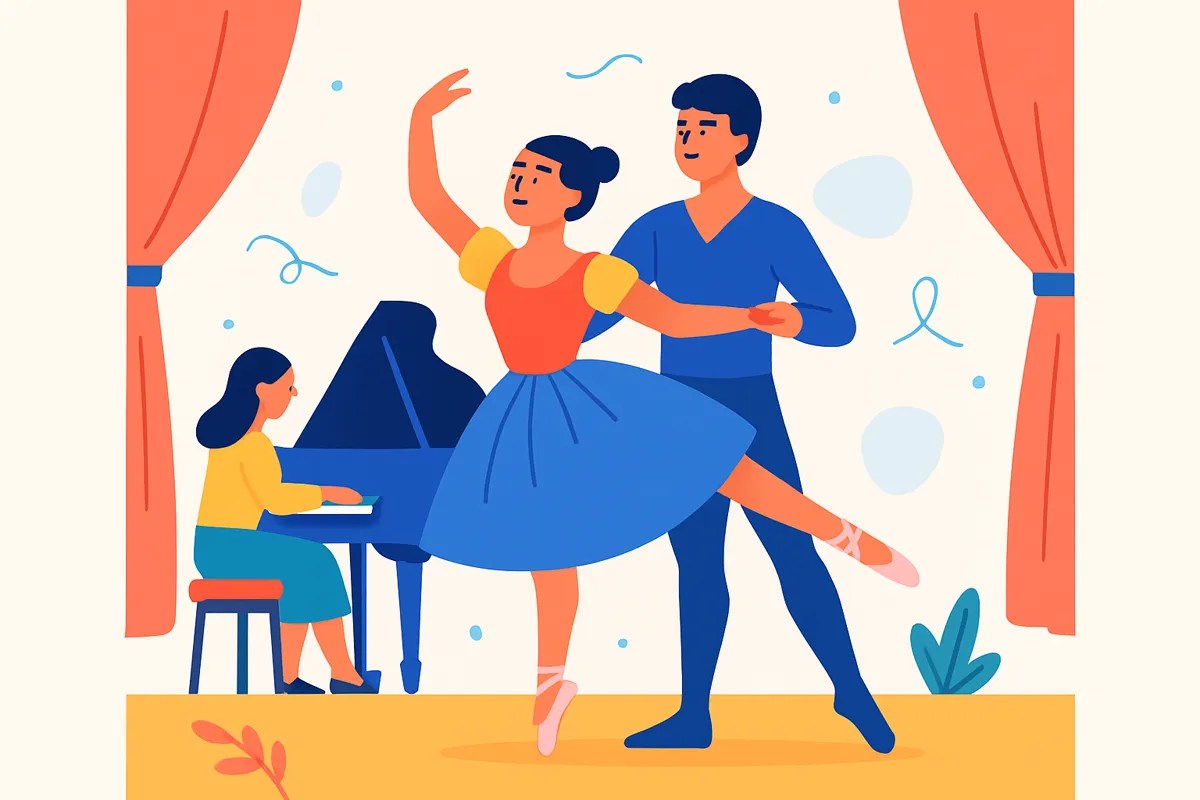
This template sets up a youth ballet and contemporary dance competition for dancers aged 9 to 20, built from one American circuit’s 2026 rules, read in full. It has seven items. Two are solos: a Classical Variation, chosen from a set classical repertoire list, and a Contemporary/Open Solo, which is any non-classical-ballet piece and may use music with appropriate lyrics. Five are partnered or group entries: Classical Pas de Deux, Contemporary Pas de Deux, Duet/Trio, Ensemble (4 Dancers) and Ensemble (5+ Dancers). Every item has its own page on this site with the printed time limit, how it is marked and what the panel looks for.
Entries are placed by age. For solos the rules print three age divisions, counted strictly on 1 January of the season: Pre-Competitive (9 to 11), Junior (12 to 14) and Senior (15 to 20). The template installs them as three Individual groups. Pas de deux, duets, trios and ensembles use a single Ensemble group, because the printed rule is the average age of the dancers, which must fall between 9 and 20, so younger or older dancers can take part as long as the average fits. Professional dancers may not compete, and a partner in a pas de deux or ensemble may not be a professional either. Time limits are printed per entry: 2:30 for a classical variation, 2:00 recommended for a contemporary solo (with a 2:30 option at an extra fee), 6:00 for a classical pas de deux, 3:30 for a contemporary pas de deux, 2:45 for a duet or trio, 3:30 for an ensemble of four and 5:00 for an ensemble of five or more.
Scoring is out of 100 and has two elements, technical and artistic. Each judge gives one mark that is the average of the two, and the entry’s total is the average of all judges, usually three to five. The rules print no weights for the two elements, so the template installs no judging criteria and no grades. They also print placings (first, second and third, plus a Top 12 at each regional event) without any points, so First, Second and Third are installed with zero points. Details the platform has no field for, such as the classical repertoire list, en pointe age rules, music file deadlines, fees by registration period, penalties and the rule that a dancer cannot take a winning place at more than one location, belong in the registration content the coordinator publishes.
The finals logic is also a registration matter. A dancer is invited to a final event from a regional round on a total of 96 or higher, or on the judges’ recommendation, and a Junior or Senior finalist must then bring one classical variation and one contemporary solo. Rules change between seasons, so check the current edition before reusing groups, and read the dated notes in the template’s registration content.
Where this event is run
Youth ballet competitions that run regional rounds and then a final event are a well-established format in the United States, where studios, academies and independent dancers enter students by age division and compete for placings, awards and opportunities offered by schools. This template follows one American circuit’s 2026 rules and suits any ballet school, regional round or national final that wants classical and contemporary solos by age plus pas de deux and ensembles by average age in one structure, without hand-building the groups and timings.
- United States
Key facts
- 7 items: Classical Variation, Contemporary/Open Solo, Classical Pas de Deux, Contemporary Pas de Deux, Duet/Trio, Ensemble (4 Dancers) and Ensemble (5+ Dancers)
- 4 groups: three Individual solo age divisions (Pre-Competitive 9-11, Junior 12-14, Senior 15-20) and one Team Ensemble group whose dancers’ average age must be 9-20
- Every entry is marked out of 100 on two elements, technical and artistic; each judge’s mark is the average of the two and the total is the average of all judges
- Printed time limits: classical variation 2:30, contemporary solo 2:00 recommended (2:30 optional), classical pas de deux 6:00, contemporary pas de deux 3:30, duet/trio 2:45, ensemble of 4 3:30, ensemble of 5+ 5:00
- Placings are first, second and third installed with 0 points; the rules print no points, no criteria weights and no grades
- Ages are counted on one fixed date for the whole season, and professional dancers may not compete
- Age groups
- 4
- Competition items
- 7
- Competitions
- 11
- Grade bands
- 0
- Rank awards
- 6
Age groups
Every candidate is placed into one of these groups by age, and competitions are run per group.
Pre-Competitive

Candidates aged 9 to 11 compete in this group
Junior

Candidates aged 12 to 14 compete in this group
Senior

Candidates aged 15 to 20 compete in this group
Ensemble
Candidates aged 9 to 20 compete in this group
Competition items
The events themselves — each with the category it belongs to and how judges score it.


Competitions by group
The full schedule matrix, sectioned by age group then category — which item runs for whom, and for how long.
| Item | Type | Gender | Language | Max score | Time limit |
|---|---|---|---|---|---|
| Pre-Competitive | |||||
| Dance | |||||
| Item | Type | Gender | Language | Max score | Time limit |
| Classical Variation | Individual | — | — | 100 | 2m 30s |
| Contemporary/Open Solo | Individual | — | — | 100 | 2m 30s |
| Junior | |||||
| Dance | |||||
| Item | Type | Gender | Language | Max score | Time limit |
| Classical Variation | Individual | — | — | 100 | 2m 30s |
| Contemporary/Open Solo | Individual | — | — | 100 | 2m 30s |
| Senior | |||||
| Dance | |||||
| Item | Type | Gender | Language | Max score | Time limit |
| Classical Variation | Individual | — | — | 100 | 2m 30s |
| Contemporary/Open Solo | Individual | — | — | 100 | 2m 30s |
| Ensemble | |||||
| Dance | |||||
| Item | Type | Gender | Language | Max score | Time limit |
| Classical Pas de Deux | Team | — | — | 100 | 6 min |
| Contemporary Pas de Deux | Team | — | — | 100 | 3m 30s |
| Duet/Trio | Team | — | — | 100 | 2m 45s |
| Ensemble (4 Dancers) | Team | — | — | 100 | 3m 30s |
| Ensemble (5+ Dancers) | Team | — | — | 100 | 5 min |
Grades and ranks
How scores turn into grade bands, and how many points each placing is worth.
| Grade | For | Condition | Score | Points |
|---|---|---|---|---|
| Rank | For | Points |
|---|---|---|
| First | Individual | 0 |
| Second | Individual | 0 |
| Third | Individual | 0 |
| First | Team | 0 |
| Second | Team | 0 |
| Third | Team | 0 |
Frequently asked questions
Can I change this template after installing it?
Yes — installing it creates a fully configured, live event, not a locked package. Every age group, competition item, rule and scoring setting can be edited afterwards to match exactly what your event actually needs.
Do I need technical knowledge to set this up?
No. Installing a template does the setup work for you; you only need to review the details (dates, unit or house names) and open registration.
Want the fuller picture first? See our guide to group dance judging criteria guide.
Install this template in eTalenter
Everything above is installed as a live, editable event in one step — age groups, items, rules and scoring. Start your own below.
Start a Youth America Grand Prix (YAGP) 2026 event
Was this guide useful?


