

Talent Test · Sunday School
Church of God Youth and Discipleship Junior Talent for ages 7-12: 25 Drama and Dance categories (mime, human video, pantomime, monologue, comedy, skit, spoken word, rhythmic, upbeat and contemporary dance) as solo, small group and large group, rated Superior to Poor.
A ready-made children’s talent competition with mime, human video, pantomime, monologue, comedy, skit, spoken word and three styles of dance, each offered as a solo or a group item and rated from Superior to Poor by a panel of adjudicators.
This template models the Drama division of a junior talent competition run by a church youth and discipleship department in the United States. Children aged 7 to 12 compete in drama and dance categories, first at state or regional level and then, for the winners, at an international round. It is built from the division’s own 2027 drama manual, with the 2026 state and regional manual read for the general rules, the rating scale and the awards, so the structure follows what those documents printed. Dates, venues and entry rules change every year, so confirm the current manual before you reuse anything.
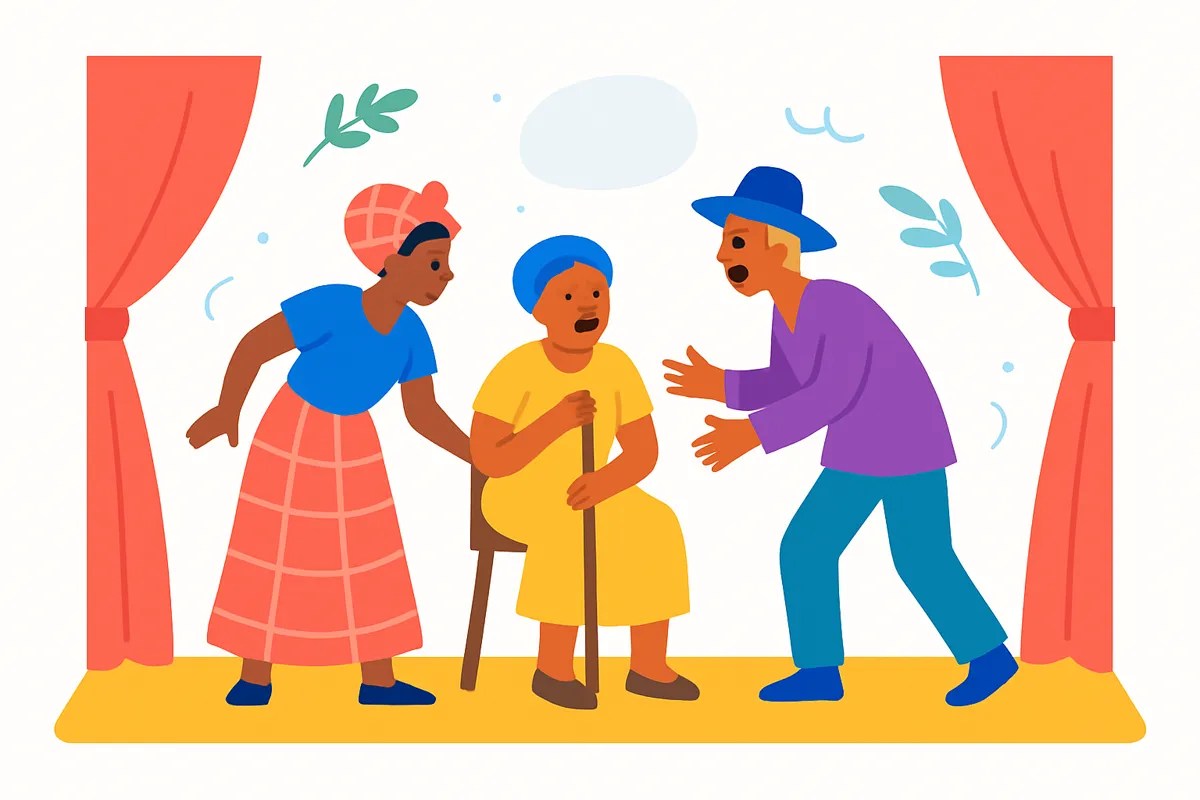
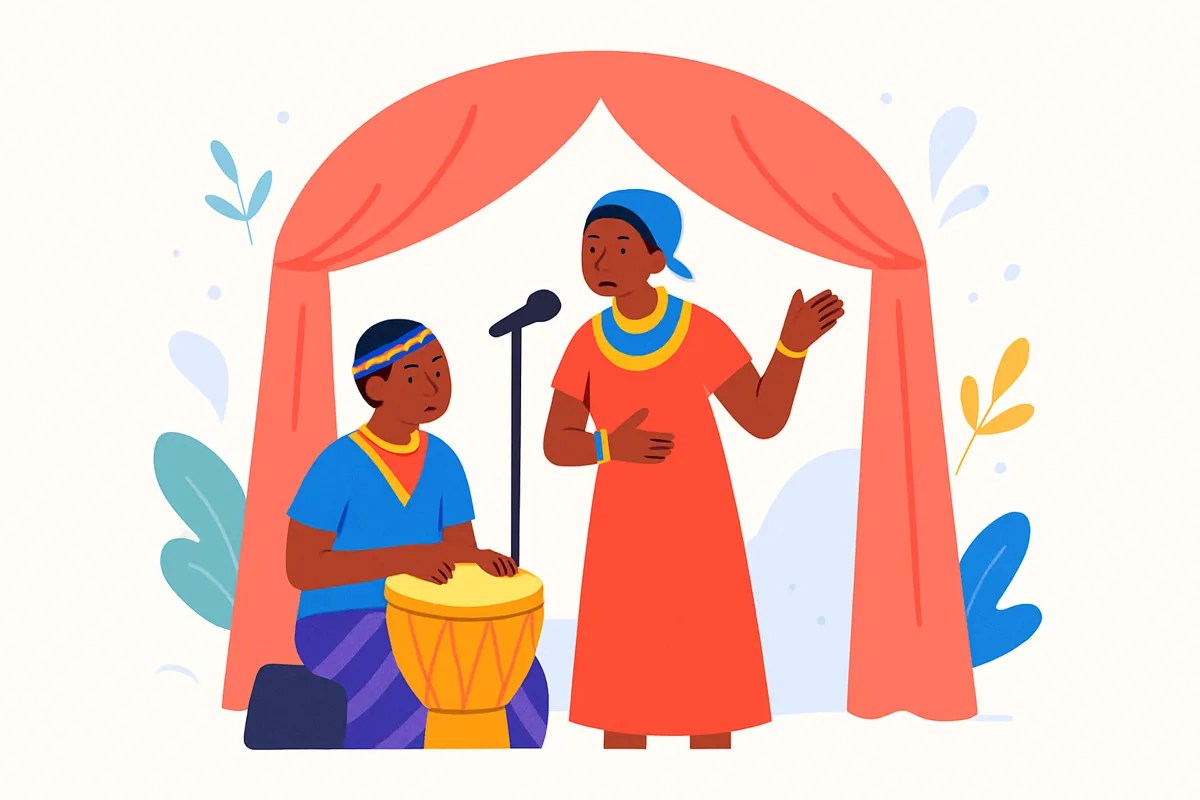
Twenty-five categories are modelled. Mime, Human Video and Pantomime or Interpretive Movement each run as a solo, a small group of two to six children and a large group of seven or more. Monologue and Christian Comedic Performance are single items. Skit runs as a small and a large group, Spoken Word as a solo, small and large item, and Rhythmic, Upbeat and Contemporary Dance each run as a solo, small and large item. Most categories allow five minutes; Christian Comedic Performance and the three Spoken Word categories allow four, and the two Skit categories allow seven. These are the printed upper limits, so the lower limits in the manual, such as three minutes for a Monologue, are not enforced by the template.
A child is eligible if they are 7 to 12 years old within the competition calendar year, from 1 January to 31 December, and a child who is 7 or 12 for even one day of that year still qualifies. The template therefore carries two groups with the same age range. Junior Solo (7-12) holds the individual categories and Junior Group (7-12) holds the small and large group categories, so that a soloist and a team never compete against each other. Every category is open to boys and girls together and is run in English.
Adjudicators rate ten factors on each score sheet from 1 to 5, and the five-point average sets the rating: Superior from 4.5, Excellent from 3.5, Good from 2.5, Fair from 1.5 and Poor from 1.0. First, Second and Third place are awarded in every category, and the manual says winners are chosen by agreement of the adjudicators rather than by points alone. The ten printed factors total 50, not 100, so the template installs no judging criteria and scores each entry on the 1 to 5 scale, with no bonus points for placings. The Art, Bible, Creative Writing, Multimedia and Music divisions are named by the manual but described in separate manuals, so only Drama is modelled here.
Where this event is run
This template suits any children’s talent competition that is run by a church or community youth programme and wants one place to enter drama and dance categories by solo, small group or large group. It fits events that rate every entry on a Superior-to-Poor scale and give three places per category, and a youth department that runs a local or regional round before sending winners to a larger final can use it as the first rung of that ladder. Time penalties, scenery deductions and the rules on costume, props and music are held as registration rules rather than scoring fields, so they sit with the entry instructions your coordinator publishes.
- United States
Key facts
- 25 categories: Mime, Human Video, Pantomime/Interpretive Movement, Monologue, Christian Comedic Performance, Skit, Spoken Word, and Rhythmic, Upbeat and Contemporary Dance
- Ages 7 to 12 within the competition calendar year (1 January to 31 December)
- Two groups: Junior Solo (7-12) for individual categories and Junior Group (7-12) for small (2 to 6) and large (7 or more) group categories
- Time limits from 4 to 7 minutes: 5 for most categories, 4 for Christian Comedic Performance and Spoken Word, 7 for Skit
- Rated 1 to 5 on ten factors and graded Superior, Excellent, Good, Fair or Poor from the average
- First, Second and Third place per category, chosen by adjudicator agreement; no judging criteria installed because the printed factors total 50
- Age groups
- 2
- Competition items
- 25
- Competitions
- 25
- Grade bands
- 5
- Rank awards
- 6
Age groups
Every candidate is placed into one of these groups by age, and competitions are run per group.
Junior Solo (7-12)

Candidates aged 7 to 12 compete in this group
Junior Group (7-12)
Candidates aged 7 to 12 compete in this group
Competition items
The events themselves — each with the category it belongs to and how judges score it.
Solo Mime

Small Group Mime
Large Group Mime
Solo Human Video

Small Group Human Video
Large Group Human Video
Solo Pantomime/Interpretive Movement

Small Group Pantomime/Interpretive Movement
Large Group Pantomime/Interpretive Movement
Monologue

Christian Comedic Performance

Small Group Skit
Large Group Skit
Solo Spoken Word
Small Group Spoken Word
Large Group Spoken Word
Solo Rhythmic Dance

Small Group Rhythmic Dance

Large Group Rhythmic Dance
Solo Upbeat Dance
Small Group Upbeat Dance
Large Group Upbeat Dance
Solo Contemporary Dance

Small Group Contemporary Dance
Show all 25 items
Competitions by group
The full schedule matrix, sectioned by age group then category — which item runs for whom, and for how long.
| Item | Type | Gender | Language | Max score | Time limit |
|---|---|---|---|---|---|
| Junior Solo (7-12) | |||||
| Drama | |||||
| Item | Type | Gender | Language | Max score | Time limit |
| Solo Mime | Individual | — | English | 5 | 5 min |
| Solo Human Video | Individual | — | English | 5 | 5 min |
| Solo Pantomime/Interpretive Movement | Individual | — | English | 5 | 5 min |
| Monologue | Individual | — | English | 5 | 5 min |
| Christian Comedic Performance | Individual | — | English | 5 | 4 min |
| Solo Spoken Word | Individual | — | English | 5 | 4 min |
| Dance | |||||
| Item | Type | Gender | Language | Max score | Time limit |
| Solo Rhythmic Dance | Individual | — | English | 5 | 5 min |
| Solo Upbeat Dance | Individual | — | English | 5 | 5 min |
| Solo Contemporary Dance | Individual | — | English | 5 | 5 min |
| Junior Group (7-12) | |||||
| Drama | |||||
| Item | Type | Gender | Language | Max score | Time limit |
| Small Group Mime | Team | — | English | 5 | 5 min |
| Large Group Mime | Team | — | English | 5 | 5 min |
| Small Group Human Video | Team | — | English | 5 | 5 min |
| Large Group Human Video | Team | — | English | 5 | 5 min |
| Small Group Pantomime/Interpretive Movement | Team | — | English | 5 | 5 min |
| Large Group Pantomime/Interpretive Movement | Team | — | English | 5 | 5 min |
| Small Group Skit | Team | — | English | 5 | 7 min |
| Large Group Skit | Team | — | English | 5 | 7 min |
| Small Group Spoken Word | Team | — | English | 5 | 4 min |
| Large Group Spoken Word | Team | — | English | 5 | 4 min |
| Dance | |||||
| Item | Type | Gender | Language | Max score | Time limit |
| Small Group Rhythmic Dance | Team | — | English | 5 | 5 min |
| Large Group Rhythmic Dance | Team | — | English | 5 | 5 min |
| Small Group Upbeat Dance | Team | — | English | 5 | 5 min |
| Large Group Upbeat Dance | Team | — | English | 5 | 5 min |
| Small Group Contemporary Dance | Team | — | English | 5 | 5 min |
| Large Group Contemporary Dance | Team | — | English | 5 | 5 min |
Grades and ranks
How scores turn into grade bands, and how many points each placing is worth.
| Grade | For | Condition | Score | Points |
|---|---|---|---|---|
| Superior | ||||
| Excellent | ||||
| Good | ||||
| Fair | ||||
| Poor |
| Rank | For | Points |
|---|---|---|
| First | Individual | 0 |
| Second | Individual | 0 |
| Third | Individual | 0 |
| First | Team | 0 |
| Second | Team | 0 |
| Third | Team | 0 |
Frequently asked questions
Can I change this template after installing it?
Yes — installing it creates a fully configured, live event, not a locked package. Every age group, competition item, rule and scoring setting can be edited afterwards to match exactly what your event actually needs.
Do I need technical knowledge to set this up?
No. Installing a template does the setup work for you; you only need to review the details (dates, unit or house names) and open registration.
Want the fuller picture first? See our guide to drama & skit judging criteria guide.
Install this template in eTalenter
Everything above is installed as a live, editable event in one step — age groups, items, rules and scoring. Start your own below.
Start a COG Junior Talent (Drama Division) event
Was this guide useful?


