

A solo item in which one singer performs a Gaelic mouth-music tune, where the words are sung to carry the rhythm of a dance tune rather than to tell a story.
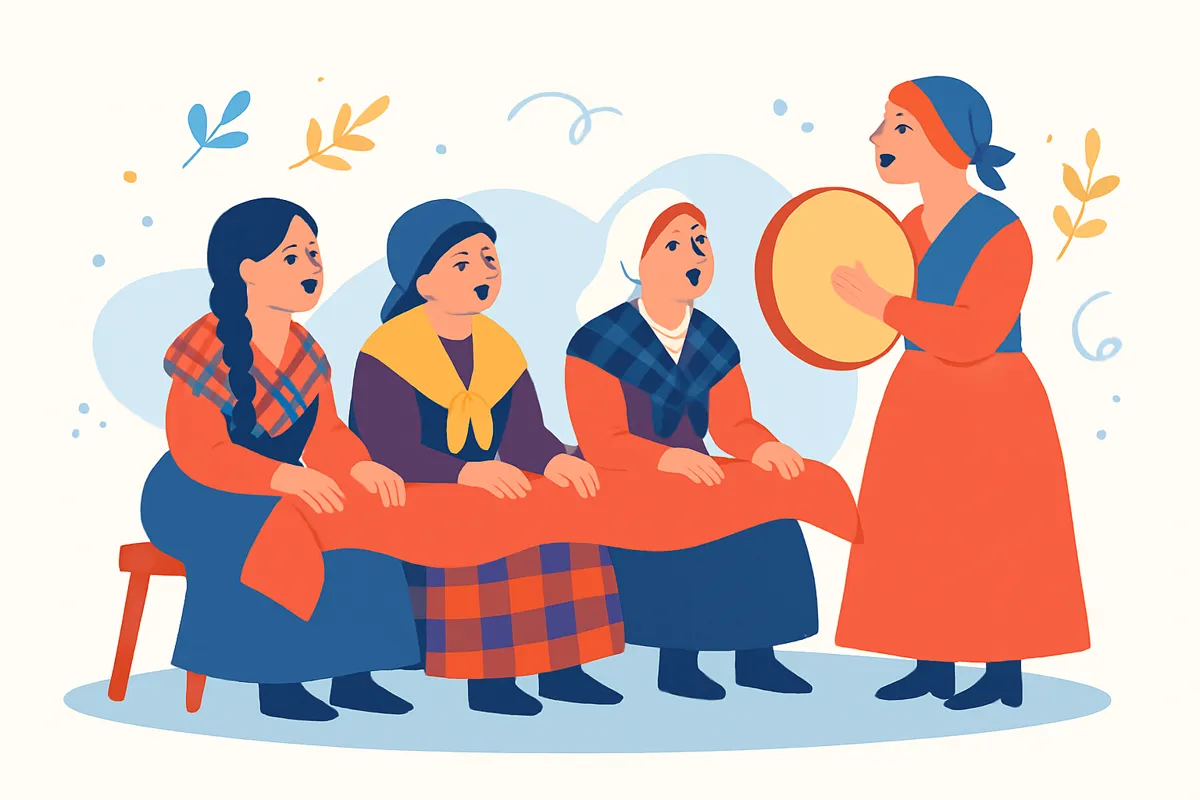
Puirt-a-beul, often translated as ‘tunes from the mouth’, is the Gaelic tradition of singing dance tunes with words. The lyrics are frequently short, playful and repetitive, and in many songs the sound and bounce of the syllables matter more than the meaning. Historically the songs stood in for instruments at gatherings where there was nothing to play, so the singer’s job is to make the voice behave like a fiddle or a set of pipes.
On the eTalenter templates the title appears once, on the Scottish Gaelic festival template, where it is an Individual On Stage item for both genders. It runs across ten bands: P1-P3, P4-P5, P6-P7, 11-12 (Secondary), 13-15 Years, 16-18 Years, then Senior Ladies (female only), Senior Men (male only), Senior Mixed and Senior Open. Every band is fixed to Scottish Gaelic. The ten-minute ceiling and the score out of 100, shown as a rating out of 10, are the app’s defaults, because the festival’s published rules print no numeric marking scheme for this item.
A round is quick to run. Each singer is called alone, announces the title, and sings the tune unaccompanied or as the festival notice allows. A set of puirt is often a run of short tunes in a row, so the singer must move cleanly from one to the next without losing the pulse. The audience should be able to tap a foot to it from the first bar.
Organisers keep the item because it is lively, short and approachable. Younger pupils can succeed with a single bright tune, while older entrants show command of faster tunes and tricky word patterns. It also gives the language section of a festival a light counterpart to its slower, story-driven songs.
Where Puirt-a-Beul is run
On the eTalenter templates Puirt-a-Beul is used only in the Scottish Gaelic festival template, a national Gaelic-language cultural festival in Scotland, where it is a solo item across the junior school bands and the four senior divisions. The tradition itself belongs to Gaelic-speaking communities in Scotland, and similar mouth-music traditions (such as lilting or diddling in Irish music) exist elsewhere but are separate competitions with their own rules; this page describes only the item as the template carries it.
- Scotland, United Kingdom
Key facts
- Individual item: one singer performs alone; male and female entrants compete together in the junior bands
- Ten bands: P1-P3, P4-P5, P6-P7, 11-12 (Secondary), 13-15, 16-18, then Senior Ladies, Senior Men, Senior Mixed and Senior Open
- Senior Ladies is female-only and Senior Men is male-only; Senior Mixed and Senior Open admit both
- Language is fixed to Scottish Gaelic on every band
- Ten-minute ceiling and a /100 maximum are app defaults, since the published rules print no numeric scheme
- Adjudication sheets are issued to entrants and the adjudicator’s decision is final, as the festival rules state
On eTalenter, Puirt-a-Beul is filed under On Stage and typically scored with Rating out of 10. It appears in 1 ready-made event templates — each one can adjust its time limit, age-group assignment and scoring setup independently.
Across the templates that use it, Puirt-a-Beul is most often entered as an Individual competition, typically scored out of 100, commonly time-limited to around 10 minutes where a limit is set.
What judges look at in Puirt-a-Beul
What a Puirt-a-Beul panel is actually weighing up, and where the marks are usually won or lost:
- Rhythm and drive: whether the tune has a steady, danceable pulse that a listener could step to, with no rushing on the easy parts or dragging on the hard ones
- Clarity of the words: crisp, correct Gaelic syllables delivered fast without blurring, since the words are doing the work of the instrument
- Style and ornament: the lift and small decorations that mark a tune as mouth music rather than an ordinary song
- Accuracy of the tune: the right notes and phrase shape, held at pitch with no instrument to lean on
- Breath control: planning breaths so the line is not chopped in the middle of a phrase, particularly in long runs of quick tunes
- Energy and presentation: a bright, confident delivery that sounds enjoyed, not recited
Treat these as the judging focus, not a fixed rubric: publish your own weighted criteria for Puirt-a-Beul under Scoring Setup, or start from the full singing competition judging criteria guide.
How to prepare for Puirt-a-Beul
How entrants and their teachers usually get Puirt-a-Beul right on the day:
- Learn the tune first, then the words: sing it on a plain syllable such as ‘da’ until the rhythm is automatic, then add the Gaelic
- Start slow with a metronome and raise the speed a few beats at a time, stopping at the fastest pace where every word is still clear
- Mark the breaths on the written words in advance and keep the same breath points in every run-through
- Listen to recordings of respected singers and note where they lean on a beat or add a lift, then borrow the idea of the style rather than copying a recording note for note
- Check the festival notice for any set-tune list, minimum or maximum number of tunes, and accompaniment rules before choosing
- If you link several tunes, rehearse the join between them until the pulse does not break
- Run the whole item standing, as on the day, so that your breath and posture are tested too
Ready-made event templates that include Puirt-a-Beul
Open any template to preview it in eTalenter and install it as a live, editable event.
| Template | Category | Score label | Competitions |
|---|---|---|---|
| Royal National Mod (Scotland) | On Stage | Rating out of 10 | 10 |
Frequently asked questions
Is Puirt-a-Beul judged individually or as a team?
Across eTalenter’s templates it’s most often run as an Individual entry, though an organiser can set either participation type when assigning the item to an age group.
What does puirt-a-beul mean?
It is Gaelic for tunes from the mouth: dance tunes sung with words so that the voice takes the place of an instrument.
Is Puirt-a-Beul the same as Traditional Singing?
No. Traditional Singing is about a song from a heritage tradition, usually a story or lament, and rewards expressive phrasing. Puirt-a-Beul is rhythm-led mouth music, and rewards drive, speed and clear quick words.
Can I use an instrument or a backing track?
The template does not say. The tradition is voice-only, but check the festival notice or ask the organiser before rehearsing with any accompaniment.
Is the item judged individually or as a team?
Individually. Each singer performs alone and receives their own result.
Want the full judging picture? Read the full singing competition judging criteria guide, or browse every on stage competition item.
Try Puirt-a-Beul in eTalenter
See every ready-made template that runs Puirt-a-Beul, and install one as a live event — age groups, rules and scoring included.

Leave a Reply
You must be logged in to post a comment.