

A sung folk-song category in a national performing arts festival in Jamaica, recorded on the template as a team entry of up to four minutes, scored out of 100 and offered in all seven classes from the youngest age band to adults and a combined class.
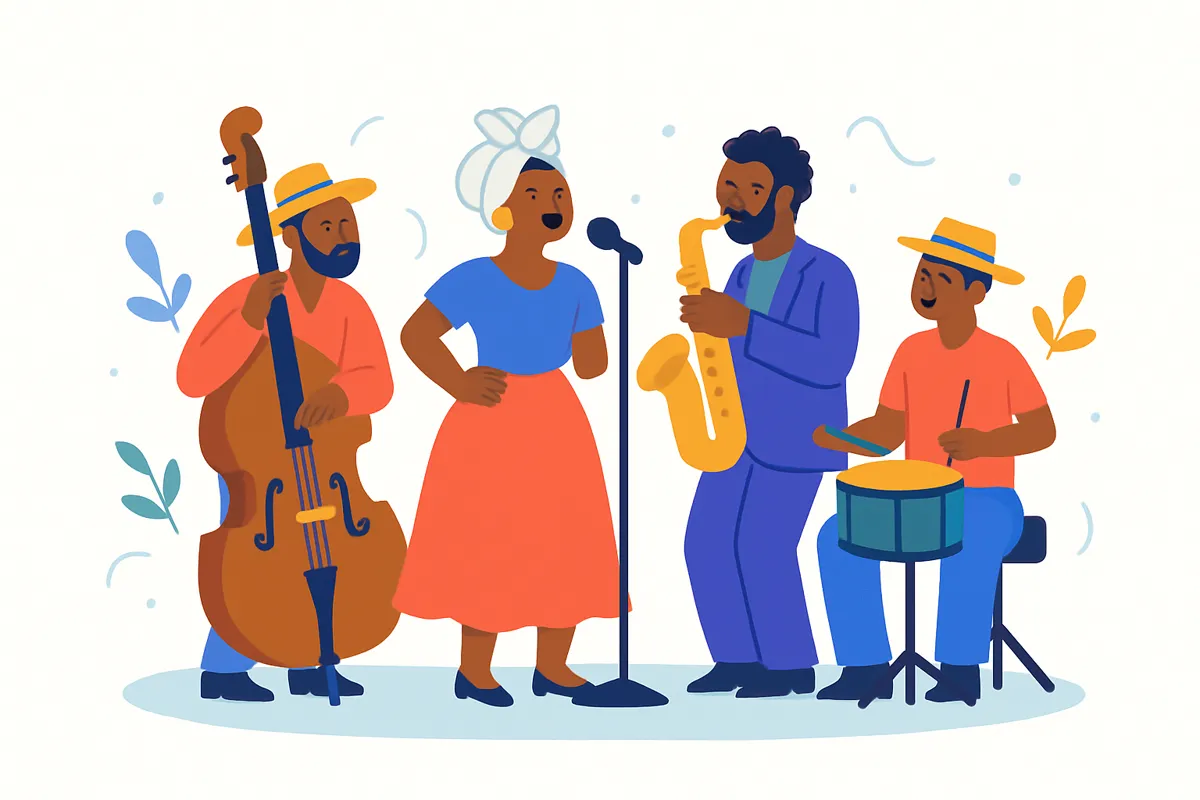
Music – Vocal Jamaican or Caribbean Folk is the seventeenth entry in the Music discipline of the Jamaican national performing arts festival list this template is rebuilt from. It follows the Jazz class and comes just before the separate class for Jamaican traditional folk forms. The words “or Caribbean” matter: the entrant sings one folk song, and that song may come from Jamaica or from anywhere else in the Caribbean, so a school or community group is not limited to the island’s own repertoire.
The festival handbook lists the category as number 18 in the Music syllabus and allows it in three formats: a solo singer, a vocal ensemble of two to twelve performers and a choir of sixteen to thirty voices. Each entrant sings one song, chosen from any standard source, and no score has to be uploaded. Unless the syllabus says otherwise songs are sung with accompaniment, a soundtrack or a live band may be used, and only singers using a full soundtrack or a live band may use a microphone.
Two handbook rules shape how a folk class looks on the day. Choirs competing in folk or popular music categories may not use a conductor, so the group has to start, blend and finish together without one, and a conductor may never sing along with a choir. That makes a folk entry feel closer to a lively community performance than to a formal concert piece, and the handbook adds that categories allowing showmanship and choreography are judged with that movement in mind.
The template turns the category into a single team entry for each class, with both genders in one list, English as the language, a four-minute limit with the warning bell at three minutes and a score out of 100. That is a simplification of the handbook, which sets two and a half minutes for a vocal solo and three minutes for an ensemble or choir. An organiser running the template should decide which limit applies, say so in the entry notice and set the time in the competition rule to match.
A typical round: the group is called, takes its places, the accompanist, band or track begins and the song is sung through once. The panel listens for a clear, honest tone that suits the song, a story that reaches the audience, any harmony or call-and-response the group has built in and the confidence of the performance. Organisers like the class because folk songs are easy to learn by ear, suit mixed ages and give a school, a youth club or a family choir a way to take the stage together.
Where Music – Vocal Jamaican or Caribbean Folk comes from
Folk songs in Jamaica and across the Caribbean were passed on by ear for generations, growing out of work songs, ring games, lullabies, story songs and the singing that went with celebrations and community gatherings. Many came to the islands through the blending of African, European and local traditions, and the same tune or verse can turn up in several islands with different words. Nothing in the source for this template says how the category came to be part of the festival or which songs have been sung in it, so no festival history is claimed here.
Where Music – Vocal Jamaican or Caribbean Folk is run
On eTalenter this item is used in one template, the Jamaican national performing arts festival template, where it is assigned to all seven classes (six age bands from the youngest children to adults aged 20 and over, plus a combined class) inside the Music discipline, between the Jazz class and the Vocal Jamaican Traditional Folk Forms class. It is a different item from that traditional-forms class, which is built around the island’s named folk traditions, and from the festival’s dance classes for Jamaican and Caribbean creative folk dance, which are judged on choreography. Folk-song classes of this kind also appear in music festivals and school competitions in many countries, but those are separate events with their own rules, repertoires and time limits.
- Jamaica (the national performing arts festival the template is built from)
Key facts
- A vocal category: one folk song from Jamaica or elsewhere in the Caribbean, sung as a solo, a vocal ensemble of two to twelve singers or a choir of sixteen to thirty voices in the festival handbook; recorded on the template as a team entry with both genders in one list and the language set to English
- Offered in all seven classes on the template, from Class 1 (ages 3-6) to Class 6 (adults, 20 and over) and the combined class, which the festival defines as any mixture of the six age classes
- One song only, chosen from any standard source, with no score required
- Folk choirs may not use a conductor, and a conductor may not sing along with a choir
- The template gives a four-minute limit with the warning bell at three minutes; the handbook sets two and a half minutes for a vocal solo and three for an ensemble or choir, so the organiser should fix which applies
- Scored out of 100 on the template; the handbook marks this category on four equal criteria of 25 marks at the audition and parish rounds, then 12.5 each (out of 50) at the national finals, and awards medals against published mark bands rather than first, second and third
- Ideas, not rules, for an organiser: a notice stating the time limit and team size, a rule on backing tracks and microphones, a request for the song title and its island of origin on the entry form, and a short list of well-known Caribbean folk songs for the youngest classes
On eTalenter, Music – Vocal Jamaican or Caribbean Folk is filed under On Stage and typically scored with Marks. It appears in 1 ready-made event templates — each one can adjust its time limit, age-group assignment and scoring setup independently.
Across the templates that use it, Music – Vocal Jamaican or Caribbean Folk is most often entered as an Team competition, typically scored out of 100, commonly time-limited to around 4 minutes where a limit is set.
What judges look at in Music – Vocal Jamaican or Caribbean Folk
What a Music – Vocal Jamaican or Caribbean Folk panel is actually weighing up, and where the marks are usually won or lost:
- The handbook prints one marking table for the folk, gospel, spiritual, popular, musicals and traditional-forms vocal categories, with four criteria of 25 marks each at the audition and parish rounds (12.5 each at the national finals). The points below follow it; the wording is a summary, not a quotation of the rule
- Vocal quality (25): clear, resonant tone, secure intonation, steady breath control and diction, with contrast in dynamics and good blend and balance in an ensemble or choir, and a sound that reflects the genre. A folk song sung in a polished concert voice with no earthiness loses marks here as surely as a flat note does
- Interpretation and expression (25): communicating the message or story, authenticity of the chosen style, emotional depth, conviction, a real connection with the accompanist or track and interaction among the performers. This is where a group that understands the song’s meaning beats one that has only memorised the words
- Musical arrangement and creativity (25): harmony, vocal layering, improvisation, stylistic embellishment, counter melodies, call and response and tasteful adaptation of a known song. A plain unison verse and chorus scores below a group that has shaped the song, as long as the tune is still recognisable
- Presentation, costume and impact (25): confidence, movement or choreography, eye contact, audience engagement, costume suited to the genre, entry and exit and entertainment value. Costume is required at the parish and national finals, and folk classes reward a performance that feels alive
- Timing: one complete song inside the limit the organiser has set; a group that overruns is stopped and asked to leave the stage, so the last verse is lost
Treat these as the judging focus, not a fixed rubric: publish your own weighted criteria for Music – Vocal Jamaican or Caribbean Folk under Scoring Setup, or start from the full singing competition judging criteria guide.
How to prepare for Music – Vocal Jamaican or Caribbean Folk
How entrants and their teachers usually get Music – Vocal Jamaican or Caribbean Folk right on the day:
- Choose the song first and the arrangement second. Pick a Jamaican or Caribbean folk song everyone in the group likes, can sing from memory and can explain in a sentence: what it is about, where it comes from and when it was sung
- Ask the organiser in writing which time limit applies to your format, how many singers are allowed, whether a backing track or live accompanist may be used and whether a microphone is provided, and keep the reply with your entry paperwork
- Trim the song to fit. A folk song with ten verses will not fit in two and a half or three minutes, so choose the verses and the chorus that tell the story and rehearse the shortened version with a stopwatch
- Do not rely on a conductor. Because folk choirs may not use one, practise starting together from a count, a hummed note or an instrument, and agree who gives the breath for the opening and the final chord
- Build one or two arrangement moments of your own: a solo verse, a harmony chorus, a call-and-response between two halves of the group or a simple percussion pattern. Write the parts down and rehearse each part alone before putting them together
- Rehearse with the accompanist or track you will use on the day; agree the key, tempo, intro and ending and bring a spare copy of the track on the device the organiser asks for
- Keep the diction clear. Folk songs often use dialect or non-standard spelling, so decide on one consistent pronunciation, mark the key words on the lyric sheet and check that the audience at the back can still follow the story
- Add movement that belongs to the song: a sway, a step, a hand gesture, a basket or prop if the organiser allows it. Keep it simple enough that nobody loses breath or pitch, and rehearse in the costume at least once
- Record a rehearsal on a phone and listen for flat notes, rushed entries and lyrics that blur, then fix those before adding movement
- After a lower result than hoped, ask for the adjudicator comments. Vocal quality and arrangement usually move a score more than louder singing or bigger movement
Ready-made event templates that include Music – Vocal Jamaican or Caribbean Folk
Open any template to preview it in eTalenter and install it as a live, editable event.
| Template | Category | Score label | Competitions |
|---|---|---|---|
| JCDC National Performing Arts Festival (Jamaica) | On Stage | Marks | 7 |
Frequently asked questions
Is Music – Vocal Jamaican or Caribbean Folk judged individually or as a team?
Across eTalenter’s templates it’s most often run as an Team entry, though an organiser can set either participation type when assigning the item to an age group.
Does the song have to be from Jamaica?
No. The category is called Vocal Jamaican or Caribbean Folk, so a folk song from Jamaica or from another Caribbean island is acceptable. The handbook says to choose the song from any standard source and does not require a score to be uploaded, so it is sensible to give the song title and its origin on the entry form.
Is this the same as the Vocal Jamaican Traditional Folk Forms item?
No. That is a separate category, number 19 in the festival handbook, and it is built around the island’s named traditional folk forms. This item is a general folk-song class that also accepts songs from the wider Caribbean, so a group should enter where its song belongs.
Can a choir use a conductor?
No. The handbook says choirs competing in folk or popular music categories may not use a conductor, and that a conductor is never allowed to sing along with the choir. The group has to start and finish together without one.
How long can the song be?
The template says four minutes with the warning bell at three. The handbook sets two and a half minutes for a vocal solo and three minutes for an ensemble or choir, so the organiser should state which limit applies before entries open and set the competition time to match. A group that goes over is stopped and asked to leave the stage.
Can we use a backing track or a live band?
The handbook allows soundtracks, with or without backing vocals, and live bands, and says the quality of a track affects the score. Only singers using a full soundtrack or a live band may use a microphone, and choirs are not amplified unless the acoustics are judged unfavourable. Confirm the arrangement with the organiser.
How many singers can enter?
In the handbook a solo is one singer, a vocal ensemble is two to twelve and a choir is sixteen to thirty voices. The template records the item as a single team entry per class without a size range, so an organiser using it should publish the range it wants.
Want the full judging picture? Read the full singing competition judging criteria guide, or browse every on stage competition item.
Try Music – Vocal Jamaican or Caribbean Folk in eTalenter
See every ready-made template that runs Music – Vocal Jamaican or Caribbean Folk, and install one as a live event — age groups, rules and scoring included.

Leave a Reply
You must be logged in to post a comment.