
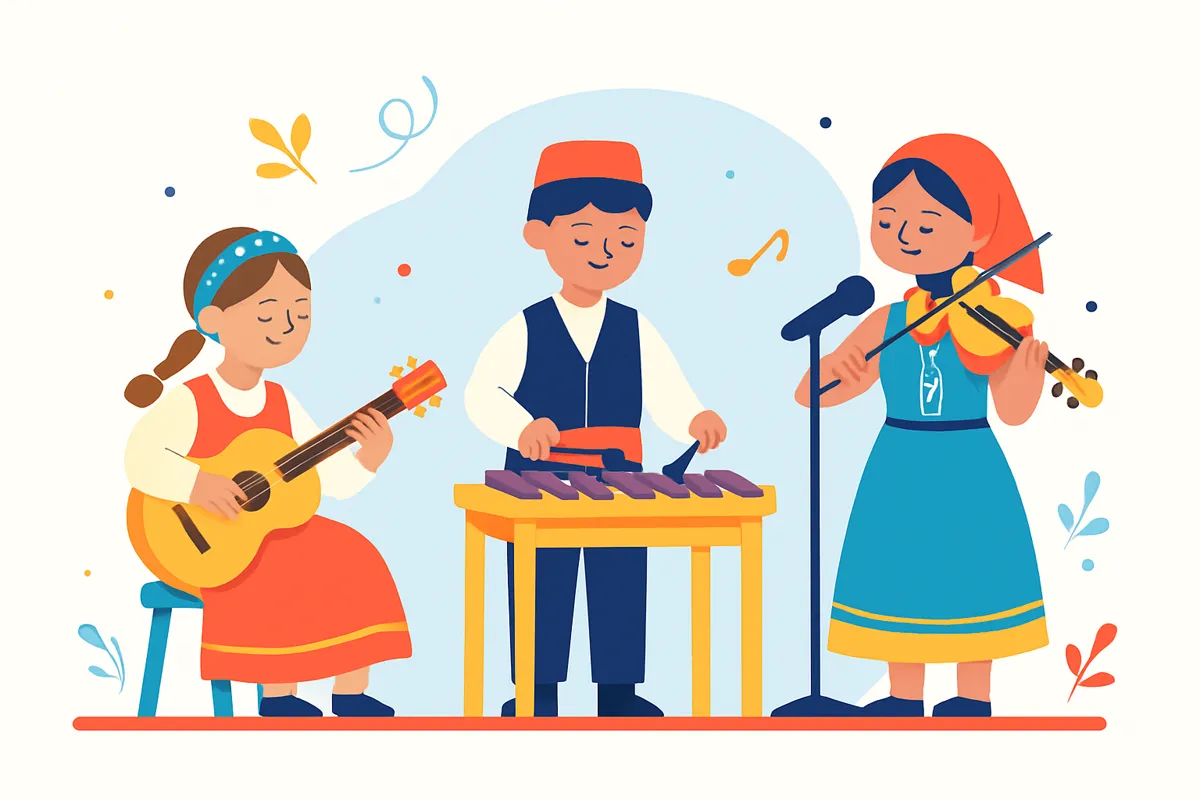
A beginners’ instrumental music section for young players who have studied for under eighteen months (novice) or who still play easy tutor-book pieces (elementary), offered in three school-age categories.
This item is the entry door to instrumental music in South Africa’s national eisteddfod. It is a separate section from the main Instrumental section, and it exists so that a child who has only just begun an instrument is not placed beside players several years ahead. The section is for instrumental music only, for junior and senior students, in classical and contemporary styles; the festival uses those two words to describe the teaching method, not a strict repertoire list.
Two levels sit inside it. A novice is a student with less than eighteen months of study, and the eighteen months count total music experience, not time on the current instrument: a child who played the recorder for two years and then took up the flute is not a novice. An elementary player has moved past that stage but still performs elementary-level pieces, which the festival describes as usually coming from tutor books, often simplified arrangements of folk, classical or contemporary tunes.
The festival’s public page lists several ways to enter. At novice level these are a solo, a recital of three pieces, a pupil and teacher duo in which the teacher plays a supporting part, and an ensemble restricted to digital keyboards. At elementary level they are an instrumental performance, a three-piece recital and a pupil and teacher duo, which the page describes as suited to secondary-school learners who are shy or lean on their teacher. Very short novice pieces may be repeated, or two short pieces presented as one item, and players supply their own instruments and a copy of the music for the adjudicator.
On eTalenter the item is a single Individual item open to both genders, offered in the Entry Level (Grades 0 to 3), Junior (Grades 4 to 7) and Senior (Grade 8 and above) categories and scored out of 100 on a working scale. The festival’s full section rules, including time limits, sit behind its registration-gated prospectus, so an organiser should state the time limit, the permitted instruments and the duo or ensemble rules in the entry notice rather than assume them. Organisers run a section like this because it keeps first-year players in the competition without the discouragement of a mixed-ability field: a first performance in front of an adjudicator, with written feedback, is the point.
Where Music – Novice and Elementary Instrumental is run
On eTalenter this item appears in one template, the one modelled on South Africa’s national eisteddfod, where it runs in all three entry categories. The novice and elementary split, and the eighteen-month rule, are that festival’s own definitions. Other festivals and school music events run beginner classes under their own rules and names, so treat this page as a description of one festival’s section and check your own event’s notice before applying it elsewhere.
- South Africa
Key facts
- An Individual item, open to both genders, offered in the Entry Level, Junior (Grades 4 to 7) and Senior (Grade 8 and above) categories
- Novice means less than 18 months of total music study, counted across all instruments; elementary means past that stage but still playing elementary-level pieces
- The festival’s public page names piano, digital keyboard, recorder and violin as examples at novice recital level; the novice ensemble is limited to digital keyboards
- The festival’s entry routes are a solo, a three-piece recital, a pupil and teacher duo and, at novice level, a digital-keyboard ensemble; the template carries one Individual item and leaves the routes to your entry notice
- The festival’s public pages set no time limit for the section, so the template sets none; add one to your own notice
- Scored out of 100 on the template’s working scale; the festival’s own awards are Diploma, Gold, Silver and Bronze, with a Junior Diploma for Grades 0 to 3
On eTalenter, Music – Novice and Elementary Instrumental is filed under On Stage and typically scored with Marks. It appears in 1 ready-made event templates — each one can adjust its time limit, age-group assignment and scoring setup independently.
Across the templates that use it, Music – Novice and Elementary Instrumental is most often entered as an Individual competition, typically scored out of 100.
What judges look at in Music – Novice and Elementary Instrumental
What a Music – Novice and Elementary Instrumental panel is actually weighing up, and where the marks are usually won or lost:
- Accuracy of notes and rhythm: at this level the first thing an adjudicator listens for is that the piece is played as written, with steady pulse and no stops to restart
- Basic technique for the instrument: hand position, posture, breath or bow control and clean starts and finishes, the foundations the festival’s yardsticks call basic skills
- Tone and control: a clear, even sound at a comfortable volume earns more than a loud or rushed one, and control of dynamics is a mark of a player moving towards elementary standard
- Musical understanding: observing the tempo, phrasing and any dynamics in the score shows the player understands the piece and is not only pressing the right keys
- Suitability of the piece: a piece chosen at the right level and played well beats a harder one played with mistakes, and it must fit the entry level the child has declared
- Presentation and confidence: a calm entrance, a settled start and a polite finish; the festival frames its judging as developmental, so the written comment matters as much as the award
Treat these as the judging focus, not a fixed rubric: publish your own weighted criteria for Music – Novice and Elementary Instrumental under Scoring Setup, or start from instrumental music competition judging criteria.
How to prepare for Music – Novice and Elementary Instrumental
How entrants and their teachers usually get Music – Novice and Elementary Instrumental right on the day:
- Check the level before entering: count every month of music study across all instruments, because a child with more than eighteen months in total is not a novice
- Pick a piece the player can already play comfortably, ideally from a tutor book, and practise it until a wrong note is a rare event, not the normal thing
- Practise the start and the finish separately: beginners lose most marks when they stall at bar one or fade out in confusion at the last line
- Use a metronome or a slow backing count to keep the pulse steady, and then bring the tempo up only as far as the player stays accurate
- Bring the instrument tuned or checked, a spare reed, string or battery where relevant, and a clear copy of the music for the adjudicator
- Rehearse the performance as a performance at least twice, standing or sitting as on the day, with an audience of family or classmates, so nerves are familiar
- If your event offers a duo, a shy player can enter with the teacher on a supporting part; agree who plays what and who gives the count-in before the day
- Afterwards, read the written comment with the teacher and choose one thing to improve before the next entry, such as rhythm, tone or reading ahead
Ready-made event templates that include Music – Novice and Elementary Instrumental
Open any template to preview it in eTalenter and install it as a live, editable event.
| Template | Category | Score label | Competitions |
|---|---|---|---|
| National Eisteddfod of South Africa (NEA) | On Stage | Marks | 3 |
Frequently asked questions
Is Music – Novice and Elementary Instrumental judged individually or as a team?
Across eTalenter’s templates it’s most often run as an Individual entry, though an organiser can set either participation type when assigning the item to an age group.
What is the difference between novice and elementary?
The festival defines a novice as a student with less than eighteen months of total music study, counting all instruments. Elementary is the next stage: a student who has passed the novice stage but still performs elementary-level pieces, usually from tutor books and often simplified arrangements.
Does a child who played one instrument before count as a novice on a new one?
Not if the total comes to more than eighteen months. The festival counts overall music experience, so a student who played the recorder for two years before starting the flute is not a novice.
Is there a time limit?
The festival’s public pages do not state one, and the full rules are in a prospectus section that registered entrants can download. The eTalenter template sets no time limit, so an organiser should state one in the entry notice.
Can the teacher play too?
The festival offers a pupil and teacher duo at both levels, in which the teacher plays a supporting part, and it treats the duo like a solo for fees. The template carries the item as Individual, so if you want duos, say so in your entry notice and set the participant type to suit.
How is this different from the main Instrumental section?
It is a separate section for players at the beginning of their study. The festival’s public Instrumental page defines the classical and contemporary styles but does not set out the grade structure in public, so check the registered prospectus for the exact boundary between the two sections.
Want the full judging picture? Read instrumental music competition judging criteria, or browse every on stage competition item.
Try Music – Novice and Elementary Instrumental in eTalenter
See every ready-made template that runs Music – Novice and Elementary Instrumental, and install one as a live event — age groups, rules and scoring included.


Leave a Reply
You must be logged in to post a comment.