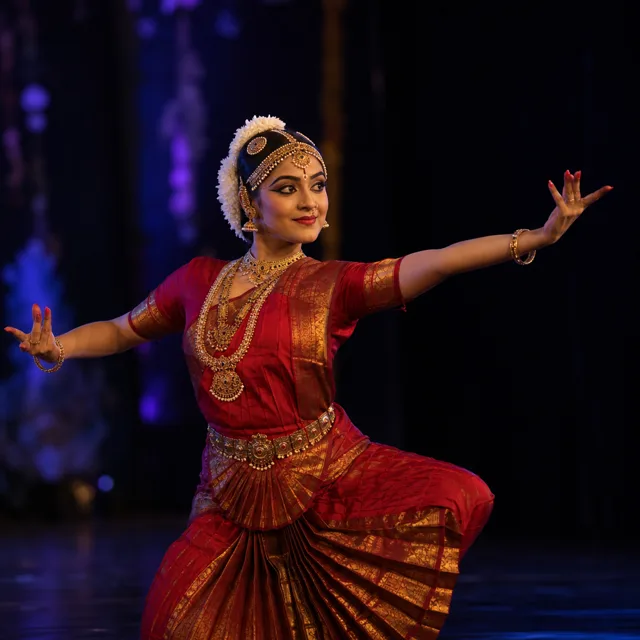
A staged group performance of Revival, the Jamaican ritual of hymn-singing, drumming and dance around a decorated table, judged on authenticity, traditional content and musicianship; recorded on the template as a four-minute team entry scored out of 100.
Traditional Folk Forms – Revival is the sixty-ninth entry on the Jamaican national performing arts festival template and the second of the seventeen items in its Traditional Folk Forms discipline. The festival handbook lists it as Revival, category 6 of the folk forms syllabus. A school or community group stages a presentation of a living Jamaican ritual form for the competition stage, and it is judged on how faithfully the group keeps the form’s character, not on how modern or polished the choreography is.
The handbook describes Revival as a religious ritual that came from the mixing of African and European cultures. It has two main branches: Zion, which is more European-Christian in outlook and deals with holy angels and heavenly spirits, and Pocomania, which deals with earth-bound spirits and keeps stronger African elements. The central figure of the group is the Mother when the leader is a woman and the Shepherd when the leader is a man. Singing is accompanied by the two drums, the rattle drum and the bass drum, and by tambourines; the words come from hymns, or are phrases that carry little meaning of their own and exist to hold the tune.
The movement has its own signature. The handbook describes a forward dip led by the shoulder, with a light stamp of the foot that falls with a downward accent and the knees slightly bent, followed by a rich variety of dance styles as the different functionaries of the group progress around the Revival table. The voice and the stamping feet also make rhythmic sounds, and the handbook calls this an important feature of the form. The table is not a prop to be added at the end: the handbook states that it plays an integral part in the category, that it is placed at the centre of the performance area, and that it is generally dressed with the objects used in Revival, such as a croton, a clear glass bottle or vase, a hymnal, a tablecloth and unlit white candles.
The rules for an entry are precise. Live music is required for these folk forms, so a recorded track is not an option. A group of 19 years and under may field 12 to 16 dancers, not counting the drummers and singers, who together may not exceed six. Those musicians are part of the procession and must not take any other role during the performance. The handbook gives the time limit as four minutes for each entry, including the entrance and exit, and it requires the piece to contain a strong element of the folk form while staying within the rules that no animals are sacrificed and no rum is used as a libation. A group may enter only one entry in a category and four categories in all, so Revival is chosen in competition with the other folk forms.
It is also an age-restricted category. The handbook bars Classes 1 and 2 from performing Revival, so those classes cannot take part even though the template carries the item across all seven classes; an organiser using the template should switch Classes 1 and 2 off for this item. Class 7, the combined class, is open to community groups only. On the day the group is marked on the shared table used for the folk forms other than quadrille, maypole and ring games, which has eight headings and totals 100 at auditions and parish level and 50 at the national finals. Organisers run Revival because it gives a community’s own tradition a place on the programme and tests understanding of the form as well as performance skill.
Where Traditional Folk Forms – Revival comes from
The handbook describes Revival as a religious ritual produced by the blending of African and European cultures, with two branches, Zion and Pocomania. It names Kingston and St Andrew, St Catherine, Manchester, St Elizabeth, St James and St Ann as the parishes where Revival is a primary indigenous folk form. The source for this template gives no dates or founding history, so none is claimed here.
Where Traditional Folk Forms – Revival is run
On eTalenter this item is used in one template, the Jamaican national performing arts festival template, where it is the second Traditional Folk Forms category and is assigned to all seven classes. The handbook bars Classes 1 and 2 from it, so in practice it runs for Class 3 (ages 10 to 12), Class 4 (13 to 15), Class 5 (16 to 19), Class 6 (adults aged 20 and over) and the combined Class 7, which is open to community groups only. The festival runs in parishes, and only the top gold-medal group per class and category in a parish moves on to the national finals. This page covers the staged competition version defined by that handbook; Revival is also a practised faith tradition outside the competition, and a staged entry is a presentation of the form, not a service.
- Jamaica (the national performing arts festival the template is built from)
Key facts
- Team entry, both genders together, in English; the handbook bars Classes 1 and 2 from Revival, though the template assigns the item to all seven classes
- The template records a four-minute window with the warning bell at three minutes, scored out of 100. The handbook’s category table gives three minutes for Class 3 and four minutes for Classes 4 to 7, while its explanatory note says four minutes for each entry, so an organiser should confirm the limit with entrants
- 12 to 16 dancers for groups aged 19 and under, not counting drummers and singers, who may total no more than six; live music only, and the musicians are part of the procession and take no other role
- Required centrepiece: the Revival table at the centre of the performance area, dressed with items such as a croton, a clear glass bottle or vase, a hymnal, a tablecloth and unlit white candles
- Typical sound and movement: rattle and bass drums with tambourines, hymn-based singing, a shoulder-led forward dip with a light downward stamp, and vocal and foot-stamped rhythms
- Ideas, not rules, for a staged piece: a gathering that opens with a slow hymn around the table and builds to the full dip-and-stamp step; a procession in which the Mother or Shepherd introduces each functionary and lets each show a personal style; a short piece that moves from unaccompanied singing to drums and tambourines. Check the choice against the rules and the organiser before rehearsing it
On eTalenter, Traditional Folk Forms – Revival is filed under On Stage and typically scored with Marks. It appears in 1 ready-made event templates — each one can adjust its time limit, age-group assignment and scoring setup independently.
Across the templates that use it, Traditional Folk Forms – Revival is most often entered as an Team competition, typically scored out of 100, commonly time-limited to around 4 minutes where a limit is set.
The scoring method the templates attach to this item, and what that scale means. The category this competition is filed under when a template is installed. Others in this category: Dance, Music, Drama, Mimicry, Debate, Elocution, Story Telling, Group Song, Action Song eTalenter matches an item to its criteria on the words in its name, and creates exactly these when the template is installed. No criteria match this name, so none are created automatically — judges score it on the event’s own criteria instead.How it is scored
Where it sits
Judging criteria installed for it
What judges look at in Traditional Folk Forms – Revival
What a Traditional Folk Forms – Revival panel is actually weighing up, and where the marks are usually won or lost:
- The handbook marks Revival on its shared table for the folk forms, with eight headings worth 100 at auditions and parish level and 50 at the national finals. The points below follow that table and are a summary, not a quotation of the rule
- Authenticity, 20 at auditions and parish level and 8 of 50 at the national finals. The panel asks whether the piece looks and sounds like Revival or like a general gospel-style dance. Marks go to the shoulder-led forward dip with the light downward stamp, hymn-based singing and the table at the centre; they are lost to a group that borrows the name and performs a modern routine
- Traditional content, 20, 20 and 8 of 50. This covers whether the songs, rhythms, objects and roles come from the tradition. A made-up song unrelated to Revival, or a table with no recognisable objects on it, loses marks even if the performance is neat
- Relevance of form, theme and mood, 15, 15 and 7 of 50. The entry should hold one clear mood from start to finish, for example a slow, reverent opening that builds in energy. A piece that jumps between unconnected moods shows that the group has not decided what it is presenting
- Role playing, 10, 10 and 5 of 50. The panel looks for a believable Mother or Shepherd and functionaries who stay in role and keep their own styles. The handbook also says the musicians belong to the procession and take no other part, so a drummer who stops to dance changes the structure and costs marks
- Movements and steps (10, 10, 6 of 50) and musicianship, rhythm and tempo (10, 10, 6 of 50): a controlled dip and stamp with bent knees, a group that moves around the table with even spacing, and drums, tambourines and voices that stay together in a steady tempo
- Costuming (5, 5, 5 of 50) and stage presence (10, 10, 5 of 50): dress that suits the roles, a table that is ready as the group enters, and an entrance, performance and exit that finish inside the time limit. The handbook applies strict attention to time limits from the parish finals
Treat these as the judging focus, not a fixed rubric: publish your own weighted criteria for Traditional Folk Forms – Revival under Scoring Setup, or start from the full folk dance judging criteria guide.
How to prepare for Traditional Folk Forms – Revival
How entrants and their teachers usually get Traditional Folk Forms – Revival right on the day:
- Begin with the rules: confirm that the class is allowed (Classes 1 and 2 are not), the 12 to 16 dancer count, the six-person limit for drummers and singers, the four-minute time limit and the live-music requirement, then plan the piece inside them
- Learn the form from people who know it. Ask a community tutor, a long-standing choir leader or a drummer from the tradition to teach the dip and stamp, the way the functionaries move and the hymn style; written notes cannot show the accent of the foot
- Choose one occasion and one mood, then build the opening, the build-up and the close around it. A slow start with hymn singing that grows in energy is easier to hold than a piece that tries to show everything
- Set up the table as part of the rehearsal, not on the day. Use the objects the handbook names, such as a croton, a clear vase or bottle, a hymnal, a tablecloth and white candles left unlit, and practise placing it at the centre of the space
- Rehearse the dip and stamp slowly with the knees slightly bent, then add the voice and stamped rhythms. Most lost marks come from a step that bounces or lifts like another dance
- Drill the circle around the table until the group keeps even spacing. Mark the floor or use a plan, because the performance area will be different from the practice hall
- Keep the musicians in the procession. Rehearse so that each drummer and singer stays in the musician role for the whole piece, and have the Mother or Shepherd cue the changes
- Time the piece at full speed with the entrance and exit included, then trim it. Stopping at four minutes with a clear ending scores better than a longer piece that is cut off
- After the result, ask for the adjudicator comments and find which heading lost marks. If authenticity was low, go back to the community teacher; if role playing was low, rehearse each functionary’s style separately before putting the group back together
Events that run this (1)
Ready-made templates that already include this competition. Installing one sets it up for you.

Frequently asked questions
Is Traditional Folk Forms – Revival judged individually or as a team?
Across eTalenter’s templates it’s most often run as an Team entry, though an organiser can set either participation type when assigning the item to an age group.
What is Revival in a folk forms competition?
The festival handbook describes it as a religious ritual that came from the mixing of African and European cultures, with two branches, Zion and Pocomania. In competition a group stages its singing, drumming and dance around a decorated table in a short presentation of the form.
Which classes can enter Revival?
The handbook bars Classes 1 and 2 from Revival. That leaves Class 3, Class 4, Class 5, Class 6 (adults) and the combined Class 7, which is open to community groups only. The template assigns the item to all seven classes, so an organiser should switch Classes 1 and 2 off.
How long is a Revival entry?
The template gives four minutes with a warning at three minutes. The handbook’s category table gives three minutes for Class 3 and four minutes for Classes 4 to 7, while its note says four minutes for each entry, so the organiser should confirm the limit before entry.
Is the Revival table required?
Yes. The handbook says the table plays an integral part in the category and is generally placed at the centre of the performance area, dressed with items such as a croton, a clear glass bottle or vase, a hymnal, a tablecloth and unlit white candles.
Can we use a recorded track or have the musicians dance?
No to both. The handbook requires live music for these folk forms, and the musicians are part of the procession and should not take any other role during the performance. Drummers and singers together may not exceed six.
Is Revival the same as Ni Nite or Wake?
No. They are separate categories with separate explanatory notes. Ni Nite and Wake is a nine night observance that starts with hymns at a slow pace and uses movements from several forms, whereas Revival is built around the Revival table, the Mother or Shepherd and its own dip and stamp step.
Similar competitions
Items whose names share a word with this one — usually the same discipline in another form.
- Traditional Folk Forms - Medley of Folk Forms 1
- Traditional Folk Forms - Wake / Ni Nite 1
- Traditional Folk Forms - Maypole 1
- Traditional Folk Forms - Tambu 1
- Traditional Folk Forms - Quadrille 1
- Traditional Folk Forms - Ring Games 1
- Traditional Folk Forms - Mento 1
- Traditional Folk Forms - Nago 1
- Traditional Folk Forms - John Canoe / Jonkunnu 1
- Traditional Folk Forms - Zella 1
- Traditional Folk Forms - Bruckins 1
- Traditional Folk Forms - Kumina 1
Want the full judging picture? Read the full folk dance judging criteria guide, or browse every on stage competition item.
Try Traditional Folk Forms – Revival in eTalenter
See every ready-made template that runs Traditional Folk Forms – Revival, and install one as a live event — age groups, rules and scoring included.